The key in your phone: digital car keys and Apple HomeKey
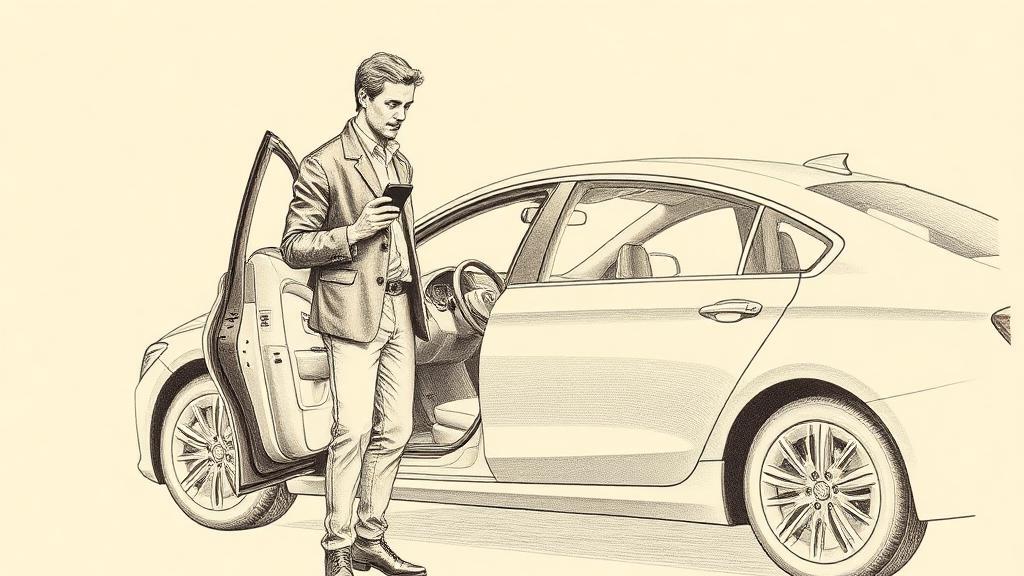
On July 15, 2020, the first owner of a new 2021 BMW 5 Series could do something that would have struck a locksmith as witchcraft: walk up to their car, hand in pocket, and hear the door unlock before they touched the handle. No key. No fob. Just an iPhone, a door handle, and a radio chip smaller than a thumbnail inside both.
Two years earlier, on June 20, 2018, the Car Connectivity Consortium — a standards body that includes Apple, Samsung, and most of the major automakers — published Digital Key Release 1.0. The 1.0 spec used NFC, the same short-range radio behind contactless payments, and required holding your phone against the door handle, then placing it in a specific spot on the center console to start the engine. Inelegant, but real: a car credential that lived in a Wallet.
Apple brought this to consumers at WWDC 2020 in June, naming BMW as its first partner. The feature — Apple called it CarKey — arrived in iOS 13.6 on July 15, 2020. The credential stored inside the Secure Enclave, Apple’s tamper-resistant chip also used for Face ID and payment cards, making it effectively unclonable. A car owner could share access with up to five people, each with configurable permissions; the option for young-driver mode could cap top speed, limit horsepower, and mute the radio above a set volume — the kind of parental supervision that used to require confiscating a physical key.
The first version required a deliberate tap. The second didn’t. Digital Key Release 3.0, published by the CCC in 2021, added Ultra Wideband alongside Bluetooth LE. Apple and BMW deployed this as Digital Key Plus on the BMW iX the same year: walk toward the door, phone in pocket, and the car wakes, authenticates, and unlocks before you touch the handle. The distinction matters — NFC is a credential you present; UWB is a credential field you walk through.
Apple took the same architecture home in June 2021. iOS 15 introduced HomeKey, storing front-door credentials in the same Wallet as the car key, the transit pass, and the boarding pass. The first compatible lock was the Schlage Encode Plus Smart Wi-Fi Deadbolt, its bolt now driven not by a brass cylinder but by an encrypted token synced through iCloud and authenticated by an iPhone tap.
The security footnote that tends to stop people: an iPhone can appear fully dead and still unlock a car or a front door. Apple reserves a small battery buffer specifically for digital keys — the phone is, to all appearances, off, but it holds enough charge to authenticate for several hours after shutdown. The engineers had apparently thought about being locked out.
By 2025, 115 vehicles across dozens of manufacturers had received Digital Key certification. The question of what a key is had quietly shifted. For most of recorded history the answer was a piece of metal cut to match a ward or a pin. Now it is an encrypted credential stored on a chip, transmitted over the air, and revocable with a tap. The ward is gone. The principle — a token that proves you have the right to enter — was never the metal to begin with.
Sources
- Car Connectivity Consortium, Digital Key Release 1.0 (June 2018) — CCC Digital Key 1.0 NFC specification, published June 20, 2018; first standardized digital car key spec.
- Apple HomeKey — addtohomekit.com — iOS 15 announcement (June 7, 2021), HomeKey NFC functionality, Schlage Encode Plus as first compatible lock, reserve battery behavior.
- Car Connectivity Consortium, Why There’s No Need for Physical Car Keys Anymore — 2025 adoption figures (115 certified vehicles), NFC/BLE/UWB technology overview.
- BMW Group Press, Digital Key for iPhone (WWDC 2020) — BMW as Apple’s first CarKey launch partner, July 2020 release with the 2021 5 Series.