Emoji join Unicode, and writing returns to pictures
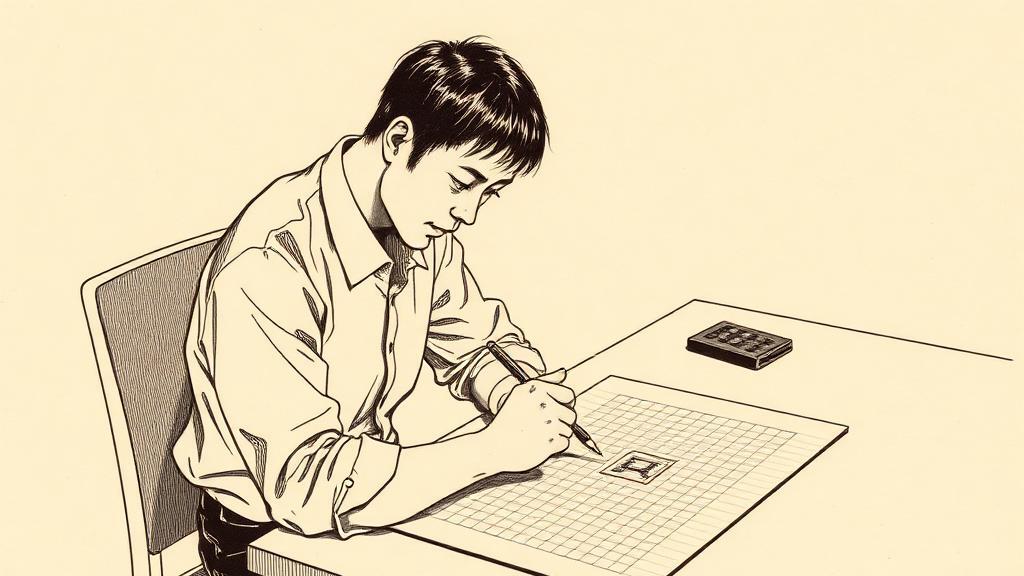
In 1999, a designer at NTT DoCoMo named Shigetaka Kurita sat down with a pencil, drew a grid twelve pixels wide and twelve pixels tall, and started filling it with pictures. He drew a sun, a crescent moon, a telephone handset, a thundercloud. When he had finished, he had 176 small pictograms — each one a complete image crammed into an area smaller than a postage stamp — and had solved, without quite knowing it, an ancient problem in a new medium: how do you carry nuance across a channel that barely carries words?
The channel was Japan’s i-mode, the first commercial mobile internet service, launched by NTT DoCoMo in February 1999. Messages were brief to the point of bluntness. Kurita’s task was to give users a visual shorthand for everything tone and gesture accomplish in face-to-face speech. He borrowed from the symbolic vocabulary of Japanese manga — the manpu, the water-drop sweat of embarrassment, the crinkle-eyed grimace of strain — and from weather charts and international road signs (Wikipedia). Kurita had not invented pictographic writing. He had re-invented it for a 90s-era flip phone.
The pictograms spread messily. Rival Japanese carriers — SoftBank, au by KDDI — developed incompatible sets of their own. A smiley face sent from one carrier arrived as a box or a question mark on another, a problem Japan’s mobile users navigated for nearly a decade. The situation resolved through the blunt force of the global market: when Apple bundled a Japanese-market emoji keyboard with the iPhone in 2008, users outside Japan noticed and wanted one too.
That created a standardization problem the Unicode Consortium could no longer ignore. In 2007, Google’s Mark Davis and a small group of colleagues began petitioning the Unicode Technical Committee — the same body that had standardized every known script from cuneiform to Cyrillic — to absorb emoji (Wikipedia). The committee had previously declined; now it reconsidered. In October 2010, Unicode 6.0 added 625 emoji characters, drawn from all three major Japanese carrier sets and reviewed by standardization bodies across the United States, Europe, and Japan. For the first time, a picture of a sun sent from Tokyo arrived in London as the same picture of a sun.
The original 176 designs that started the sequence have since come to rest in the Museum of Modern Art. In 2016, MoMA added Kurita’s emoji to its permanent collection, and curator Paola Antonelli described them as “the humble masterpieces of the digital world.” The 12-by-12-pixel grid, the design constraint that had forced Kurita into pure essentials, had produced something legible across cultures precisely because it had no room for anything inessential.
Writing systems began as pictures of things — a pot for a pot, a sheep for a sheep — pressed into Sumerian clay around 3500 BCE. The alphabet arrived later, a brilliant abstraction that broke pictures into sounds and made writing portable across speakers of the same language. Emoji returned to the older logic: a sun is a sun in Japanese, English, or Finnish. The Unicode Consortium placed them in the standard alongside cuneiform and the Latin alphabet, which is probably where they belong.
Five thousand years of writing history, and the circle turned out to be shorter than anyone thought.
Sources
- Shigetaka Kurita — Wikipedia — Creation of 176 emoji for NTT DoCoMo’s i-mode in 1999; 12×12 pixel grid; inspiration from manga manpu, weather pictograms, and Chinese characters.
- Emoji — Wikipedia — Spread of emoji across rival Japanese carriers; Google’s Mark Davis petition to Unicode Technical Committee from 2007; Unicode 6.0 (October 2010) adoption of 625 emoji.
- Shigetaka Kurita. Emoji. 1998–1999 — MoMA — MoMA permanent collection entry; Paola Antonelli’s description as “humble masterpieces of the digital world.”