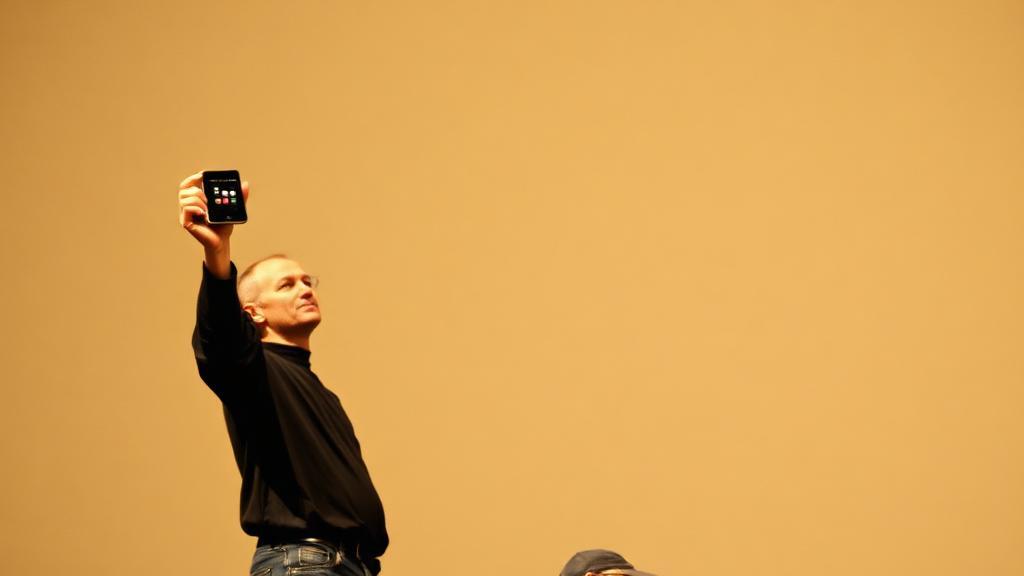
Three products in a pocket: the original iPhone
On the morning of January 9, 2007, Steve Jobs walked onto the stage at Moscone West in San Francisco and told a crowd of four thousand people he was about to show them three new products. An iPod with a touch screen. A mobile phone. And a breakthrough internet communicator. The audience applauded after each one. Then Jobs paused. “These are not three separate devices,” he said. “This is one device. And we are calling it iPhone.”
The buildup to that moment had taken roughly two and a half years. Somewhere around mid-2004, Jobs had pulled three of Apple’s most capable engineers — Tony Fadell from the iPod hardware team, software chief Scott Forstall, and design director Jonathan Ive — into a project they were not allowed to discuss outside a locked building at 1 Infinite Loop. They called it Project Purple. Engineers on other floors of the same building were kept ignorant of what was happening above them. Apple’s total investment in development, including its arrangements with Cingular Wireless, ran to an estimated $150 million over thirty months (Wikipedia).
The Cingular deal was itself remarkable. For eighteen months, Jobs negotiated a carrier partnership while refusing to show the carrier the device. Cingular CEO Stan Sigman agreed to unprecedented revenue-sharing terms, with Apple retaining full control of hardware and software — for a product he had never touched (Apple Newsroom). Cingular was rebranded AT&T before the iPhone launched, and the exclusive deal held until February 2011.
What arrived at retail on June 29, 2007, priced at $499 for the 4GB model, was a 3.5-inch capacitive touchscreen phone that required no stylus, no physical keyboard, and no carrier-mandated software. The screen responded to fingers directly — no resistive pressure required, no plastic nub to drag across menus. Every other smartphone on the market, including the BlackBerry and the Nokia N-series, assumed that a phone needed buttons. The iPhone assumed it didn’t.
Sixty-eight days after launch, Jobs cut the price by $200. The people who had camped outside Apple stores on June 28 to be first reacted with volcanic fury on forums and blogs. Jobs’s response was as calculated as the product itself: he offered every early buyer a $100 Apple Store credit (Wikipedia). Not a refund. A credit, redeemable only at Apple. The people most outraged at Apple were sent back to spend money there, and most of them did.
The iPhone did not invent the smartphone. IBM’s Simon had tried it in 1994. Nokia’s Communicator had been at it for a decade. What the iPhone did was make the pocket computer feel inevitable — small enough to carry, capable enough to replace three separate things. Within a year, Apple would open the App Store and hand the platform to anyone who wanted to build on it. Within two years, every major phone manufacturer had concluded that touch was the only viable interface. Motorola, Nokia, and BlackBerry had collectively sold a billion phones with keyboards. The next billion would look different.
The device Jobs called five years ahead of anything else turned out to be right about where things were going. It had simply declined to wait.
Sources
- iPhone (1st generation) — Wikipedia — development timeline, Project Purple origins, technical specs, Cingular partnership, launch pricing, and the 68-day price cut.
- Apple Reinvents the Phone with iPhone — Apple Newsroom — Jobs’s keynote framing, the three-products presentation, and Cingular carrier terms.
- History of the iPhone — Wikipedia — AT&T exclusivity, post-launch price controversy and $100 credit offer.