shoes · 3 min read
Nike Project Amplify, or the shoe that pushes back
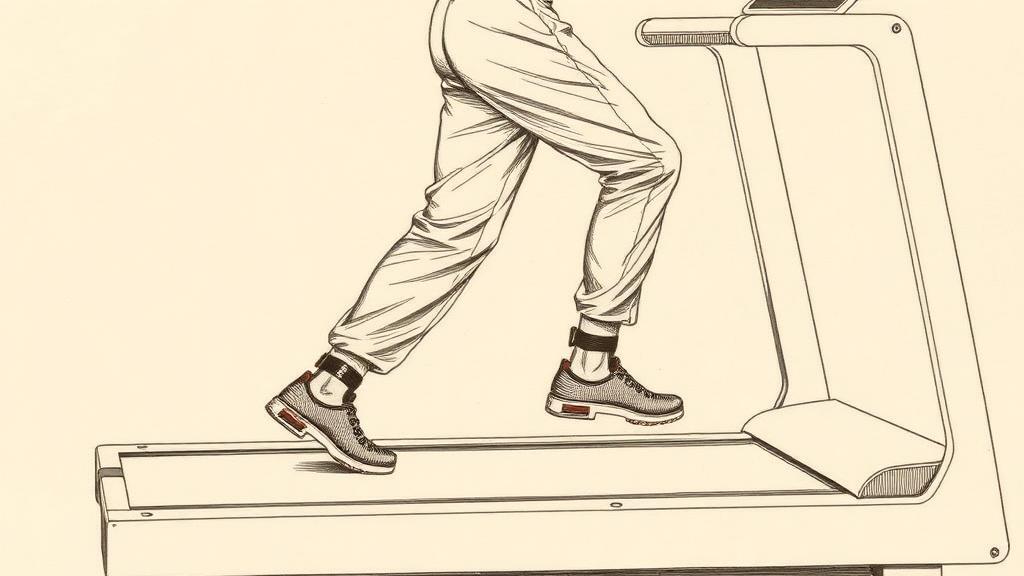
A tester laced up at Nike’s Beaverton campus in January 2026 and stepped onto an uphill treadmill. What followed looked, to the people watching the data, like cheating: a 12-minute-mile pace that felt like a 10, a slope that felt like flat ground. The shoe was pushing back.
Nike has been building Project Amplify for more than eight years inside the Philip H. Knight Campus in Beaverton, Oregon. First revealed on October 28, 2025, the system is scheduled for commercial release in 2028. Mike Yonker heads the team; Alison Sheets-Singer is the lead scientist. What they have produced is not quite a shoe in any sense the last century would recognize: a carbon-fiber-plated running shoe paired with a motorized ankle cuff — 3D-printed titanium leg shells gripping the calf, a drive belt, a battery pack, and a motor that fires each time the foot pushes off.
The choice to target the ankle was not arbitrary. Luke Mooney, CEO of Dephy — the Massachusetts startup that built the motor system in partnership with Nike — spent his doctoral years at MIT’s Biomechatronics Group studying exactly this problem. The ankle, he notes, does over 50% of the work of propelling a person forward when walking. It is also, after more than forty hardware iterations, the hardest joint to power well. Nike chose Dephy because of a decade of that work. The motor adds a measured boost during push-off, scaling with the wearer’s own effort; Nike describes the sensation as “a tailwind rather than a treadmill belt that has its own ideas.” The system is prohibited in sanctioned competition under World Athletics rules, and Nike does not contest that: Project Amplify is a fitness and mobility product, aimed at recreational runners, people returning from injury, and anyone who wants to go further with less punishing effort.
Dephy did not start in a sportswear lab. Mooney founded the company with Hugh Herr — the MIT researcher who rebuilt his own legs with carbon-fiber prosthetics after losing them to frostbite at nineteen — following doctoral work on robotic prosthetics. The ExoBoot that preceded the consumer Sidekick was funded largely by the U.S. Army DEVCOM and Air Force AFWERX programs, soldiers under load being the first test population. What Mooney took from those trials was not primarily data: it was that “the user’s experience is their reality, and it’s often more right than the data.”
Every major footwear innovation of the past decade — ZoomX foam, carbon plates, rocker geometry — was passive: it changed what the shoe returned from the ground. Project Amplify is the first consumer shoe to add energy from outside the body. Yonker describes the assist as “multiples higher” than the early Vaporfly’s efficiency gains for everyday athletes. The parallel to the e-bike is deliberate. In cycling, motor-assist quietly erased the gap between the casual rider and the trained one, and the sport grew.
For six thousand years, a shoe’s job was to protect a foot from the ground. The foot still did all the work. Project Amplify changes the job description.
Sources
- Nike Project Amplify — OPB — team details (Yonker, Sheets-Singer), specs, 2028 commercial launch, Dephy partnership.
- Why the Ankle: Dephy CEO Luke Mooney — Exoskeleton Report — ankle biomechanics (50% of propulsion), forty-plus hardware iterations, MIT Biomechatronics origins, military testing findings.
- Nike Project Amplify Launch — Running Lookout — eight-year development timeline, May 2026 innovation showcase, 2028 release date, regulatory status.