The Nintendo Entertainment System, or the console Nintendo refused to call a console
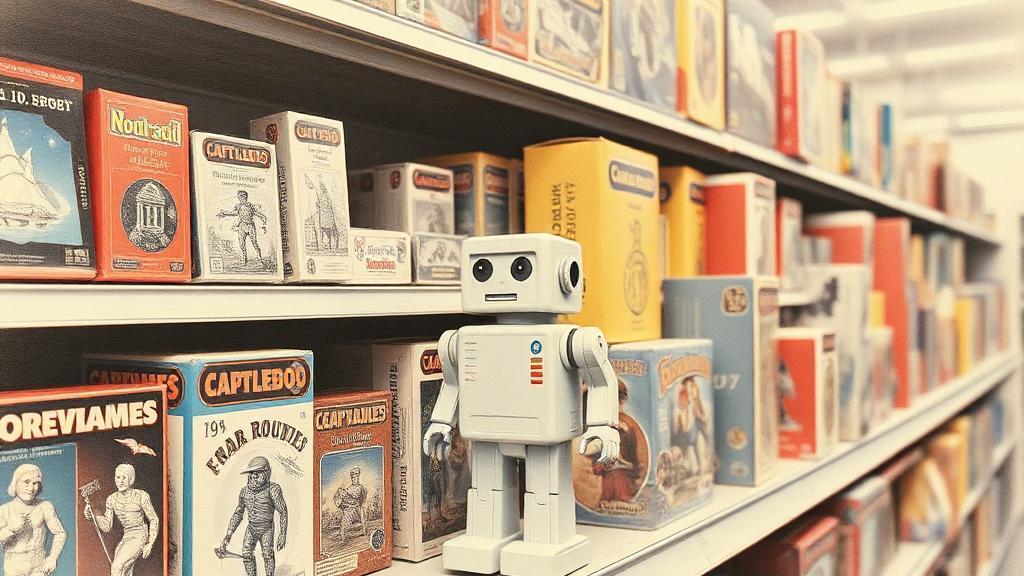
In October 1985, a robot named R.O.B. sat on toy-store shelves across New York City between the Transformers and the Voltron sets, looking vaguely like the future. He was seven inches tall, moved with the jerky servo-whine of a wind-up toy, and came bundled with a gray rectangular box that Nintendo was very careful not to call a video game console.
The box was the Nintendo Entertainment System. The robot was cover.
By 1983, the American video game market had imploded so thoroughly that retailers refused to stock anything that used the word “game.” Atari had shipped five million Pac-Man cartridges into a two-million-cartridge market; the surplus burned buyers, cratered prices, and turned the category toxic. When Minoru Arakawa, president of Nintendo of America, tried to interest American retailers in the company’s Famicom — Japan’s runaway hit, launched July 15, 1983 — no buyer would take his call.
So Nintendo redesigned the product from the outside in. The Famicom became the Entertainment System, not the Game Console. Cartridges became Game Paks. The controller deck was styled to look like a VCR, a front-loader you’d plausibly have under a television for non-gaming purposes. And every deluxe set came with R.O.B. — the Robotic Operating Buddy — a wireless plastic robot compatible with exactly two game titles, whose entire commercial purpose was to get the box shelved in the toy department alongside Hasbro and Mattel rather than in an electronics aisle nobody visited anymore. A 1986 Nintendo consumer survey found that the robot was the primary reason families bought the system. Once it was home, R.O.B. gathered dust and Super Mario Bros. took over.
The NES launched in New York in October 1985. Arakawa sweetened the deal for skeptical buyers with terms that were, by retail standards, extraordinary: 90-day credit, full in-store setup, and guaranteed return of any unsold inventory. Nintendo absorbed all the risk. The machines moved anyway. The national rollout followed in 1986, and by 1990 the NES was in 38 percent of American homes — roughly 27 million units — and an industry that had been pronounced dead was generating nearly a billion dollars a year again (Wikipedia).
Inside each console and each Game Pak sat a pair of chips that made this revival structurally unlike anything before it. The 10NES lockout system required one chip in the console and one in every licensed cartridge; on startup, they had to handshake correctly or the machine reset in a loop and refused to run the game. Unlicensed cartridges could not boot. Third-party publishers who wanted access to the NES’s 27 million households had to license through Nintendo, pay a per-cartridge fee, and accept strict limits on how many titles they could release each year. The Computer History Museum describes this as Nintendo restructuring an industry rather than merely reviving it: the console became a platform, and the platform’s terms were set by the platform’s owner.
The NES’s final production tally — 61.91 million units worldwide — tells one story. The larger story is the business model it normalized. A console was not a television accessory or an open appliance; it was a gated ecosystem, and whoever held the key controlled what software ran inside a hundred million homes. Every console maker since — Sony, Microsoft, and the app stores that inherited the logic — has operated on exactly that premise.
Sources
- Nintendo Entertainment System — Wikipedia — launch dates, sales figures, retailer strategy, the 10NES licensing chip, R.O.B. bundling and consumer survey.
- Computer History Museum — Nintendo Ups the Ante — Nintendo’s restructuring of third-party licensing and the platform control model.
- R.O.B. — Wikipedia — R.O.B.'s role as retail Trojan horse and the 1986 consumer survey data.