Nokia 3310: the phone designed with a smile
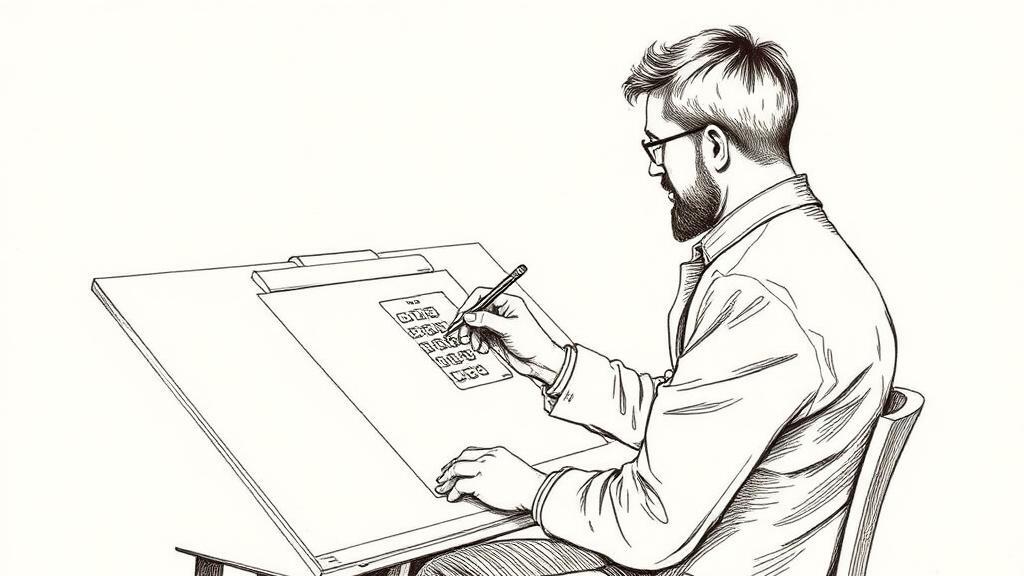
In 1998, a Finnish designer named Tapani Jokinen sat down with a sketchpad at Nokia’s R&D center in Copenhagen’s Sydhavn district and made a deliberate choice about a keypad: it would smile. The T9 key cluster, arranged just so, produced a face. This was not an accident. Jokinen called his approach “visual ergonomics” — the idea that a device’s shape should communicate ease and friendliness before anyone pressed a single button (New Leaf). The phone those sketches eventually became would sell 126 million units and achieve a cultural afterlife that outlasted its electronics.
The internal codename was “Beetle.” About fifty young engineers, most of them in their mid-twenties, worked out of Nokia’s Frederikskaj offices under product manager Lone Tram Middleton (Chipday). Nokia marketed the result as Finnish; the engineering — industrial design, electronics, much of the underlying silicon — was Copenhagen work. The 3310 launched on September 1, 2000, at a lifestyle event in Oberhausen, Germany, themed “Don’t be bored. Be totally board.” Simultaneously, Nokia ran “Nokia Unplugged” concerts across Hong Kong, Manila, and Chengdu. For a handset announcement, this was conspicuously more pop concert than press conference.
The 3310 replaced the Nokia 3210, which had already buried the external antenna and pioneered the internal one. The 3310 went further. Its 84×48 pixel monochrome display anchored a genuinely new feature: a chat function that threaded SMS replies into something resembling the internet chat rooms most users already knew, with messages running up to 459 characters (Wikipedia). Xpress-On covers — interchangeable plastic shells, eventually produced in thousands of aftermarket designs — made the 3310 arguably the first phone conceived to be personalized rather than merely carried. It also shipped with Snake II, Space Impact, Bantumi, and Pairs II, because the people who built it were mostly in their twenties and understood that a phone could be entertaining.
Here is the fact Finland thought worth commemorating: in November 2015, the country designated the Nokia 3310 as a national emoji, officially titled “The Unbreakable” (Wikipedia). By then the phone had been discontinued for a decade, yet its reputation had only expanded. Across the internet, videos accumulated of 3310s dropped from buildings, driven over by cars, run through dishwashers, recovered intact. The durability was genuine — the chassis was polycarbonate, the engineering careful — but the mythology had long since outrun the material. HMD Global, which acquired the Nokia brand, revived the 3310 in 2017 largely because the legend had become more valuable than the object itself.
What the 3310 unlocked was harder to name at the time. By framing a phone as a lifestyle accessory — something to match your outfit, load with games, use to chat — Nokia set the terms on which every handset that followed would have to compete. Personalization, entertainment, social function: these became baseline expectations for a mobile phone, not optional extras. The Xpress-On cover was, in concept if not in code, the App Store’s earliest ancestor.
By the time production stopped in 2005, 126 million of those smiling keypads had traveled into pockets worldwide — the beige ones, the translucent blue ones, the ones with the custom covers someone’s cousin sold at the weekend market. The smile Tapani Jokinen sketched in Copenhagen in 1998 had gone everywhere.
Sources
- Nokia 3310 — Wikipedia — release date, specifications, 126 million unit sales, chat function, Xpress-On covers, Snake II, “The Unbreakable” national emoji.
- The Nokia 3310 — Designed in Denmark (Chipday) — “Beetle” codename, the Copenhagen engineering team, product manager Lone Tram Middleton, Danish origin of the design.
- Meet the legendary Nokia 3310 designer — New Leaf/EEB — Tapani Jokinen’s design philosophy, “visual ergonomics,” and the deliberate smile element in the keypad layout.