SPG Keyless, or the hotel room that opened without a card
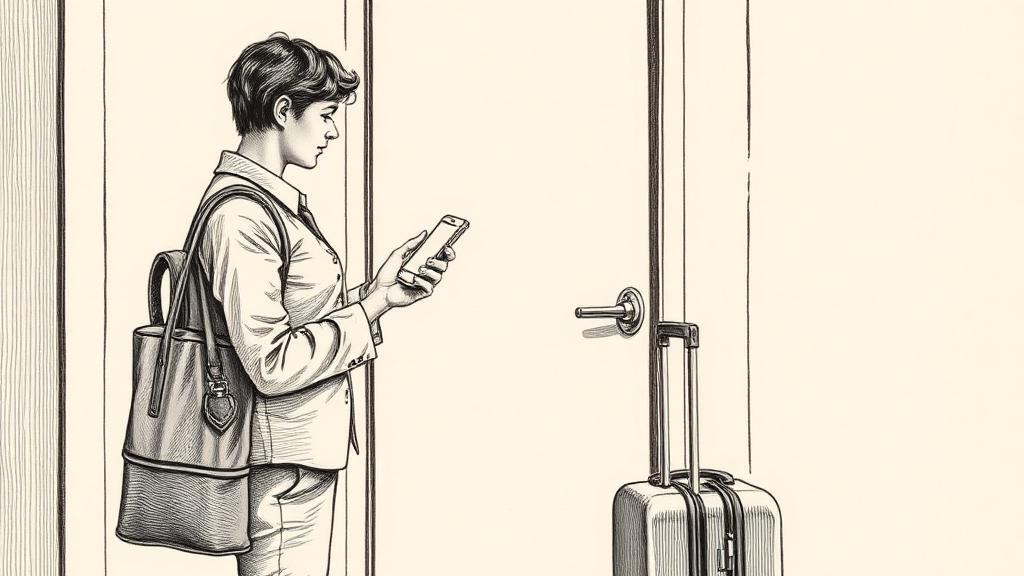
On the evening of November 6, 2014, a guest arrived at the Aloft hotel in Harlem with two bags and a phone. No front desk, no envelope, no plastic card. The room number was on the screen; the key was somewhere inside the handset in encrypted form. At the door, the guest held the phone to a small circular reader and the bolt drew back. The hotel door — whose lock traced a four-thousand-year line back to wooden pins in an Egyptian bolt — had just ceased to require a key.
Starwood Hotels & Resorts Worldwide had been building toward this for three years. In 2011, the company had launched Smart Check-In at its Aloft properties: guests received their room number by text and used an RFID key card rather than queuing at the front desk. The friction was reduced; the card survived. SPG Keyless, as the 2014 system was called, removed the card.
To build the hardware, Starwood enlisted ASSA ABLOY, the Stockholm company whose lock mechanisms secure roughly one in three commercial doors on earth. The brief required purpose-built Bluetooth-enabled locks — not retrofits of existing hardware, but new units designed from the outset for wireless authentication. The technology choice was partly forced: Apple had shipped the iPhone 6 in September 2014 with its NFC chip locked exclusively to Apple Pay. A system that needed to work on iOS had to use Bluetooth Low Energy instead.
SPG Keyless went live across ten properties on November 6: Aloft Harlem, Element Times Square, W Hollywood, W Hong Kong, W Singapore, W New York Downtown, W Doha, Aloft Beijing, and Aloft Cancun among them. Starwood Preferred Guest members opted in twenty-four hours before arrival, received a push notification with their room number and encrypted digital key, and entered by opening the SPG app and holding the phone near the reader. The system already supported the Apple Watch — announced by Apple seven weeks earlier, not yet available to buy.
The VingCard magnetic-stripe keycard, which had served hotels since 1975, was routinely demagnetized by the one object every traveler carried — a phone. Hotel guests knew the ritual: arrive at the room, find the card dead, haul luggage back to the desk. Starwood executives described the friction explicitly when they announced the system. The phone in the same pocket that had been causing the problem became the thing that replaced it.
By the end of 2015, SPG Keyless was installed on 30,000 doors across 150 hotels worldwide. Hilton, watching, launched its own Bluetooth room-key system later that year across four of its brands. The hospitality industry had — together, at commercial scale — validated what the rest of the lock world needed to know: that ordinary guests, tired and carrying luggage, checking in at any hour, would reliably use a phone as a room key without front-desk support.
Apple HomeKey arrived in 2022. Aliro, the standard that made all digital lock credentials interoperable across iOS and Android, came in 2026. The chain of cause stretches directly back to a Bluetooth handshake at a hotel door in Harlem one November evening.
The keycard replaced the metal hotel key in about forty years. The phone replaced the keycard in eleven.
Sources
- Announcing the Global Debut of SPG Keyless — Business Wire — official press release: November 2014 launch, ASSA ABLOY partnership, Bluetooth technology, initial ten-property rollout.
- Starwood Debuts Global SPG Keyless Room Entry — Hospitality Technology — launch details, how the opt-in and push-notification workflow functioned.
- Starwood Expands SPG Keyless — Hospitality Technology — 30,000 doors across 150 hotels by end of 2015; Hilton rollout context.
- Starwood picks Bluetooth for mobile room keys — NFCW — Bluetooth over NFC rationale; Apple Watch pre-launch compatibility.
- Starwood Debuts SPG Keyless — The Points Guy — guest experience detail; Starwood leadership (CEO Frits van Paasschen, SVP Chris Holdren) announcing the system.