Sydney's Iron Lung
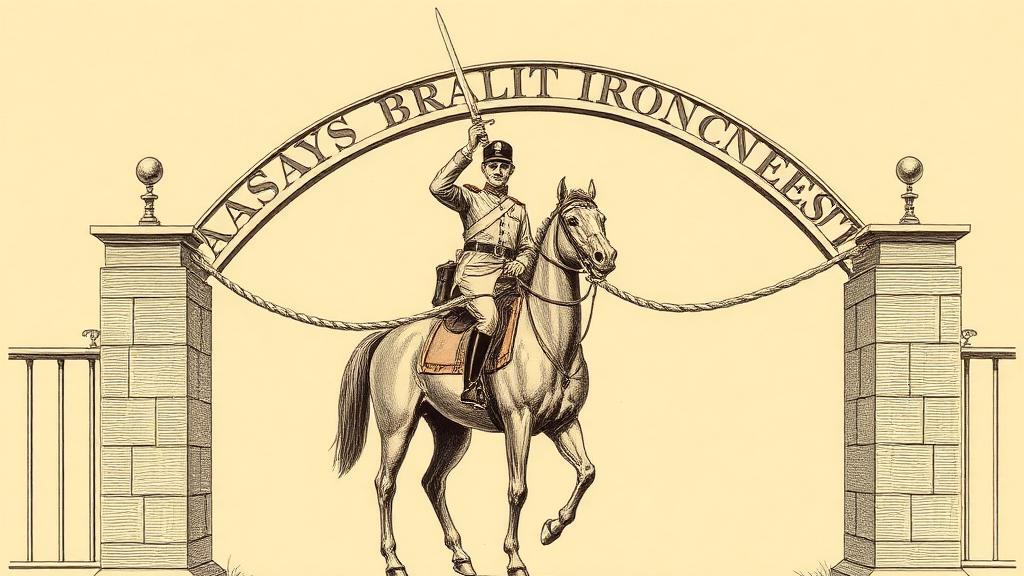
On the morning of 19 March 1932, as 750,000 people packed the Sydney foreshore, a man named Francis de Groot borrowed a horse, rode to the ceremonial ribbon stretched across the new harbour bridge, drew a cavalry sword, and cut it — two minutes before Premier Jack Lang had his scissors ready. De Groot was a member of the New Guard, a right-wing paramilitary group that objected to a Labour premier receiving the honour. He was arrested, fined £5, and removed; the ribbon was re-tied, Lang cut it properly, and the bridge opened to traffic. It was, in every sense, an inauspicious debut for one of the most carefully engineered structures on earth.
The man who spent twenty years making that moment possible was John Bradfield, chief engineer of the New South Wales Department of Public Works. Bradfield had first presented bridge plans to parliament in 1912, proposing either a cantilever or suspension design. The government deliberated for a decade, settled on a steel arch in 1922, and awarded the contract to British firm Dorman Long & Co., which brought in Ralph Freeman as consulting engineer to execute the detailed structural calculations. The first sod was turned on 28 July 1923.
What rose over the next eight years was an arch 504 metres across and 134 metres above the harbour — the widest long-span bridge in the world at that moment. The main arch weighs 39,000 tonnes; the whole structure 52,800, nearly all of it British steel shipped out in parts. Building it required a precise trick: both halves of the arch were cantilevered out simultaneously from opposite shores, each held by cable stays anchored in tunnels bored into sandstone bedrock. The two halves joined, with millimetre accuracy, on the night of 19 August 1930. Lawrence Ennis, the Scottish construction director who called it “the most difficult job in 40 years of bridge work,” was watching.
Sixteen men died during construction. In October 1930, one of them almost became seventeen: Vincent Kelly overbalanced while riveting, somersaulted backwards off the structure, and entered the harbour feet first from a height that should have killed him. He survived. The project was built almost entirely through the Great Depression, when Australian unemployment hit 21 per cent. Workers called it “the Iron Lung” — because it kept families breathing when almost nothing else would. The bridge cost £6.25 million; the debt was not fully paid off until 1988, fifty-six years later.
Before the bridge, Sydney was two cities. The North Shore held roughly 300,000 people with no direct road link to the central business district; the overland detour added 20 to 30 kilometres to any crossing. Ferries carried the gap but ferries cannot carry lorries, cannot carry a city’s commerce, cannot carry a tram. The bridge ended the division almost overnight. North Shore suburbs that had been outer periphery became inner city; the city’s centre of gravity shifted and spread in ways the ferry schedule had never permitted.
The arch was drawn for eight vehicle lanes and two rail tracks. Bradfield was betting, in 1932, that a harbour city does not stay the same size. He was right, and the bridge has not disagreed with him yet.
Sources
- Sydney Harbour Bridge — Wikipedia — construction timeline, engineering team, arch dimensions, opening ceremony and de Groot incident, cost and debt repayment.
- Sydney Harbour Bridge Construction — World History Encyclopedia — Vincent Kelly’s fall, Lawrence Ennis quote, arch-joining moment, “Iron Lung” nickname, Great Depression context, North Shore population figures.