Amazon Web Services and the invention of the cloud
In 2005, one of Amazon’s most important engineers asked to work from South Africa. Chris Pinkham had helped write the internal proposal that would become AWS, and he wanted to build it in Cape Town, nine thousand miles from Seattle. Amazon said yes. The service he shipped from there went live on August 25, 2006. It was called Elastic Compute Cloud — EC2 — and it cost ten cents an hour.
The idea had started two years earlier, in a short paper that Pinkham co-wrote with colleague Benjamin Black. Amazon’s engineering teams kept rebuilding the same foundational infrastructure — compute, storage, networking — from scratch on every project. The paper proposed standardizing it, automating it completely, and exposing everything through clean APIs. Near the end, almost as an afterthought, the authors mentioned that Amazon could sell this capability to outside developers. Bezos read it, asked for a more detailed version, and by 2004 there was a project team. Black later noted that the original design looked almost nothing like what the team eventually shipped — credit, he wrote, belonged to the engineers who actually built it.
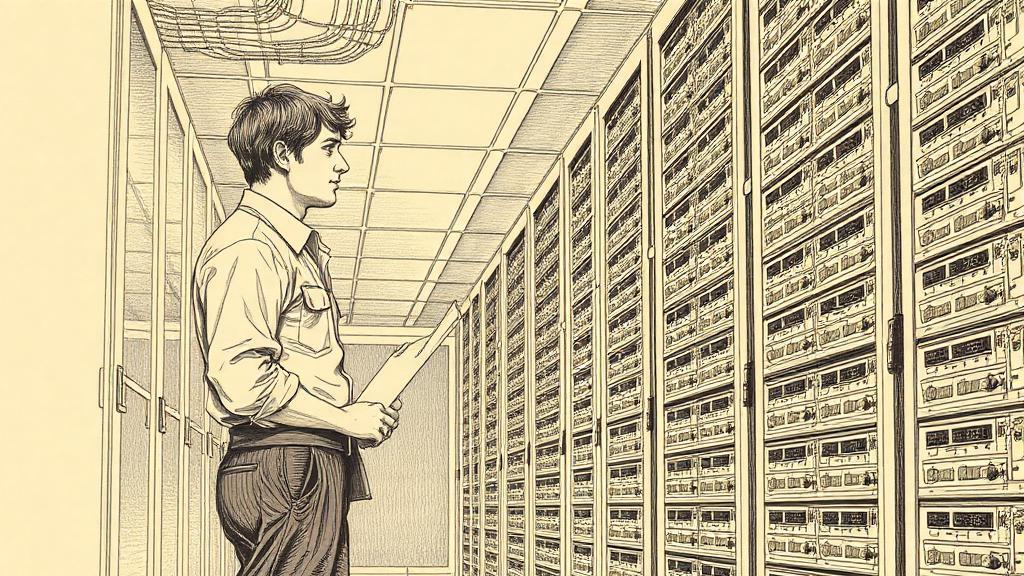
Amazon had started with storage. Simple Storage Service (S3) launched March 14, 2006: upload a file, retrieve it, pay by the gigabyte. EC2 added the compute layer — a virtual server on demand, one region, one instance type, a small machine humming in a data center in Northern Virginia. On October 23, 2008, EC2 exited beta and became a commercially available service with formal service-level agreements. The cloud was, officially, open.
The first S3 customer was Don Alvarez, a former physics researcher who had become a filmmaker and needed a way to share production footage between remote teams without shipping hard drives through the mail. He tested S3 before the public launch and later said he could not believe the power Amazon had just handed him. A year after S3 went live, a startup called Dropbox launched on top of it, serving millions of users without owning a single server. In August 2008, Netflix announced it was moving its entire video catalog to AWS. That migration took eight years to complete. The commitment took about five minutes.
Before 2006, building software at scale meant acquiring hardware: servers, racks, colocation leases, multi-year contracts, a twelve-week lead time on physical delivery. A startup that guessed wrong on capacity could buckle under demand or bleed cash on idle machines. The choice between underbuilding and overbuilding was a permanent condition. What Pinkham and Black’s footnote proposed — and what AWS actually delivered — was that computing should behave like electricity: available on demand, billed exactly to use, scalable without a purchase order.
The economics of starting a software company never fully recovered from that comparison.
Every AI training run, every streaming queue, every app that has failed under unexpected load and come back online five minutes later runs on infrastructure whose commercial terms trace to that ten-cent-an-hour machine in Virginia. The servers were always there. Someone just made them rentable.
Sources
- Timeline of Amazon Web Services — Wikipedia — launch dates for S3 (March 14, 2006) and EC2 (August 25, 2006 beta; October 23, 2008 GA), Pinkham’s Cape Town team, early enterprise migrations.
- The earliest AWS customers — About Amazon — Don Alvarez as first S3 tester, the economics of pre-cloud infrastructure, Dropbox and Netflix as early adopters.
- EC2 Origins — Benjamin Black’s blog, January 2009 — the 2003 Black/Pinkham internal paper, Bezos’s involvement in refining the design, Black’s account of what changed during development.