coffee · 3 min read
Ethiopia names its coffee — and bills the world for the difference
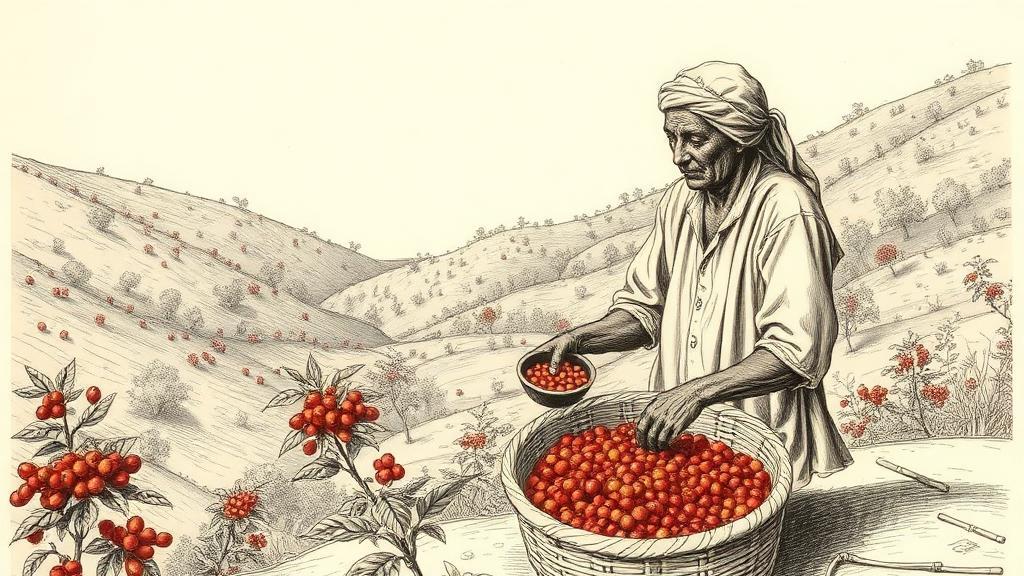
In 2004, a kilogram of coffee grown above Yirgacheffe, in the Gedeo Zone of southern Ethiopia — the kind roasters in Seattle and London labeled “exotic” and priced accordingly — left Ethiopian hands for about one US dollar. The retail equivalent, by the time it reached a Starbucks cup a hemisphere away, was closer to twenty-five dollars per kilogram. The word “Yirgacheffe” was doing a great deal of work for a name that Ethiopia did not legally own.
Getachew Mengistie, Director General of the Ethiopian Intellectual Property Office, had spent years thinking about that gap. In 2004, his office launched the Ethiopian Coffee Trademarking and Licensing Initiative — a plan to register “Yirgacheffe,” “Sidamo,” and “Harar,” Ethiopia’s three most coveted coffee designations, as trademarks in 34 countries, then license those names to roasters and retailers worldwide for a share of the premium those names commanded. Ethiopia was not trying to nationalize the trade. It was trying to own the sign above the door.
Filing began in earnest in 2005. The U.S. Patent and Trademark Office approved Yirgacheffe without much resistance. The applications for Sidamo and Harar ran into coordinated opposition: the National Coffee Association argued the names had become generic descriptions of coffee types rather than protectable trademarks — the same legal reasoning that keeps “cheddar” off the register. Starbucks, which sold all three origins under its own branding, backed the association’s position and proposed a certification-mark system instead.
The story acquired an edge when another filing came to light. Starbucks had, apparently unknown to the Ethiopian government, applied in 2004 to trademark “Shirkina Sun-Dried Sidamo” — a Starbucks product name, not an Ethiopian place, but one containing the word “Sidamo.” The two applications could not advance simultaneously; Ethiopia’s Sidamo filing sat in limbo while Starbucks’ was pending. After opposition proceedings, Starbucks abandoned the Shirkina mark in mid-2006. Oxfam had already begun running newspaper advertisements estimating that Ethiopia was forfeiting $88 million a year in potential premium earnings — and placing those figures next to Starbucks’ logo.
Starbucks and Ethiopia settled in May 2007. Howard Schultz, Starbucks Chairman, signed a voluntary licensing agreement acknowledging Ethiopian ownership of all three names regardless of formal trademark status. Harar’s registration had cleared the USPTO in August 2006; Sidamo’s followed in February 2008. Within a year of the settlement, Yirgacheffe farmers were receiving six to eight dollars per kilogram — roughly six times the pre-initiative price. By mid-2009, Ethiopia had licensing agreements with nearly one hundred international distributors.
The trademarks turned geography into an asset that the geography actually controlled, applying intellectual-property law to a commodity that had always been valued at the point of transformation, never at the point of origin. Every bag of single-origin coffee sold today with a district or farm name on the label is working in the legal space Ethiopia staked out in Addis Ababa in 2004.
Sources
- WIPO: “The Coffee War: Ethiopia and the Starbucks Story” — Getachew Mengistie’s role, the initiative’s structure, the USPTO proceedings, and farmer income outcomes
- WIPO Magazine: “Making the Origin Count: Two Coffees” — Yirgacheffe approval, Sidamo/Harar rejections, $6–8/kg post-settlement price, and licensing agreements
- NBC News: “Starbucks settles dispute with Ethiopia” — Oxfam’s $88 million claim, the May 2007 settlement, and Howard Schultz’s signature
- Justia Trademarks: Shirkina Sun-Dried Sidamo — USPTO record of Starbucks’ 2004 application and 2006 abandonment