GoldenEye 007: the movie tie-in that built the console shooter
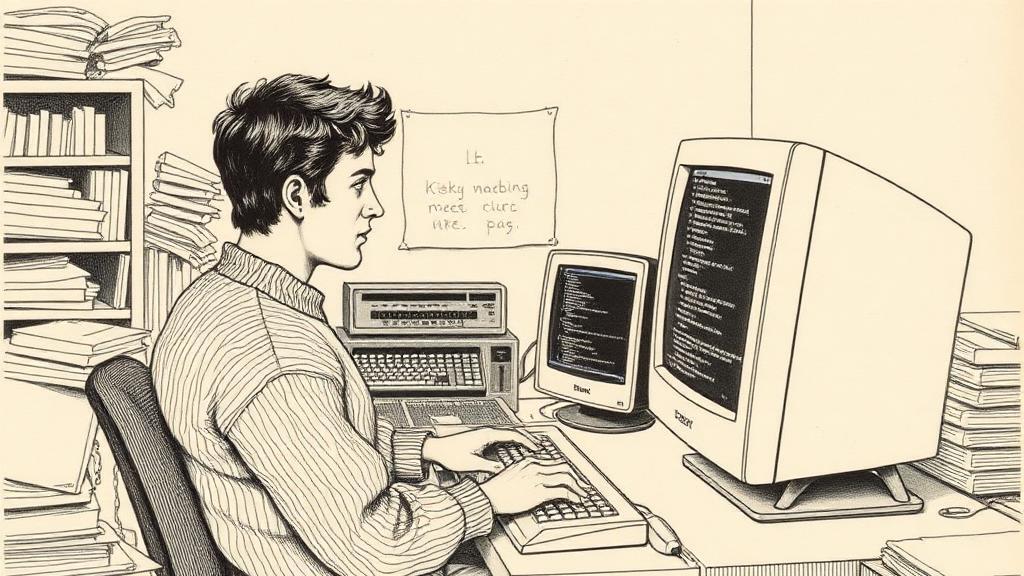
Somewhere in Twycross, Leicestershire — a village better known for a small zoo on its outskirts — Martin Hollis spent the first weeks of 1995 assembling a team. Three people at first. Nine by the end. For most of them, this would be their first professional game. Rare Ltd had assigned them a James Bond movie tie-in, a roughly two-million-dollar budget, and no template for what they were building.
The genre barely existed on consoles. First-person shooters ran on PC, driven by mouse and keyboard, and the received wisdom held that a thumbstick couldn’t replicate the precision the format required. The project had started life as a 2D side-scroller for the Super Nintendo before Nintendo’s new 64-bit hardware changed the possibilities. Rare’s team visited Leavesden Studios to photograph props and costumes from the film still in post-production. They borrowed Virtua Cop’s targeting approach and took notes from Super Mario 64’s open three-dimensional spaces. Then they spent two and a half years solving problems nobody had solved before on home hardware.
What they shipped on August 25, 1997 — GoldenEye 007 for the Nintendo 64 — was not the game anyone had expected to make. The single-player campaign gave players discrete objectives that changed with difficulty setting: escape a Soviet facility on Agent; also protect a contact, photograph surveillance equipment, and destroy a ventilation system on 00 Agent, in the same map. Soldiers dove for cover, triggered alarms, and searched by sound. Context-sensitive hit locations distinguished a headshot from a body wound. Nobody had done this on a home console.
The multiplayer mode nearly didn’t ship. Split across four screens on a single television, it arrived in the game’s final months and went out without fanfare. Players chose from Bond characters and villains, fought across a handful of maps, and discovered immediately that the combination was very difficult to stop. “I didn’t really know what I was working on,” one developer later said — which may be the most precise description of the accidental masterpiece in game history.
GoldenEye sold more than eight million copies and became the third best-selling N64 title, behind only Super Mario 64 and Mario Kart 64. At the 1998 D.I.C.E. Awards, the Academy of Interactive Arts and Sciences gave it its first-ever Game of the Year honor. The Strong National Museum of Play inducted it into the World Video Game Hall of Fame in 2025, alongside Quake and Defender, for proving that a home console could host a first-person shooter without apology — and from that proof, Halo: Combat Evolved followed in 2001 and Call of Duty made the genre a permanent fixture by mid-decade.
Hollis and his colleagues in Twycross had not set out to rewrite anything. They were making a licensed product on a sensible budget. The blueprint they drew by accident is the one the industry has been following ever since.
Sources
- GoldenEye 007 — Wikipedia — Development timeline (January 1995 start), team composition, release date and platform, sales figures, genre significance.
- GoldenEye 007 — The Strong National Museum of Play — 2025 World Video Game Hall of Fame induction, D.I.C.E. Award for first-ever Game of the Year, eight million copies sold, influence on Halo and Call of Duty.
- Nine people at Rare — GamesRadar — Developer oral histories on team size, first-game status, and the improbable nature of the project.