You can't outsource your understanding
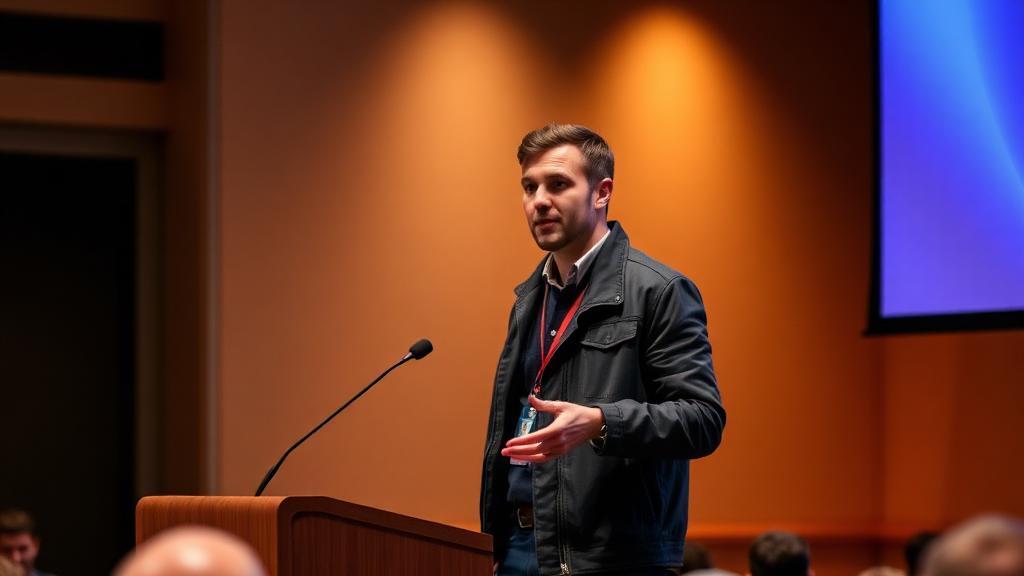
At Sequoia’s AI Ascent conference on April 30, 2026, Andrej Karpathy—the neural-network educator who had spent years on YouTube making backpropagation comprehensible to undergraduates—walked on stage and declared that vibe coding was over. Not dead, exactly. Just no longer the point. He had a replacement term ready: agentic engineering.
The term vibe coding, which Karpathy himself had coined in a February 2025 tweet, described something real: a joyful recklessness where developers described what they wanted in natural language, accepted whatever the AI produced, and iterated by pasting error messages back into the chat. Y Combinator’s CEO Garry Tan revealed in March 2025 that a quarter of that winter’s cohort had codebases 95% AI-generated. For personal projects and prototypes, the method worked. For software with real users, security requirements, and uptime expectations, something was absent.
That something became visible in December 2025. “Around December 2025, I felt a step change: the generated chunks got larger, more coherent, and more reliable,” Karpathy told Sequoia’s Stephanie Zhan. The programming unit shifted. Instead of asking a model for a function and checking whether it compiled, an engineer could delegate a feature, a subsystem, a full refactor—and receive something that mostly worked. The ratio of creation to review inverted. The bottleneck moved.
Agentic engineering, as Karpathy defined it, is “the professional discipline of coordinating fallible agents while preserving correctness, security, taste, and maintainability.” The operative word is coordinating. The agentic engineer writes specs before prompting, reads diffs for architectural soundness rather than syntax, builds evaluation loops so agents can iterate toward correctness, and catches plausible-but-wrong decisions before they ship. “Vibe coding raises the floor,” he said. “Agentic engineering raises the ceiling.”
The floor-versus-ceiling distinction showed up concretely in a project called MenuGen. Karpathy’s original version was a small pipeline: upload a menu photograph, extract text by OCR, generate dish images, stitch everything together in a web interface. Months later, a sufficiently capable multimodal model could overlay images directly onto the photograph in a single prompt call. The app had been built of model-limitation workarounds. When the limitation dissolved, so did the app. “Some apps,” he observed, “should stop existing as apps.”
The harder example was microGPT, his pared-down educational implementation of a language model. He tried repeatedly to have agents simplify it further—to strip it to its clearest instructional form. They consistently failed. “You feel like you are outside the RL circuits,” he said. Models trained on code that accumulates abstractions had no gradient toward code that actively removes them. A human who understood the material could do what the model could not. Which was the point.
The pattern is not new. Every tool in this series that automated a layer of software—from structured programming’s abolition of the goto, to REST’s erasure of custom API contracts, to A2A’s flattening of agent-to-agent plumbing—raised the same question afterward: what remains? The answer is always design, judgment, and the ability to verify what you cannot produce by hand. Karpathy’s closing line at Sequoia was also his thesis: “You can outsource your thinking, but you can’t outsource your understanding.”
The stack keeps delegating. The understanding stays human.
Sources
- Sequoia Ascent 2026 — Andrej Karpathy — Karpathy’s own account of the April 30, 2026 fireside chat; the December 2025 step change, MenuGen, microGPT, and the definition of agentic engineering
- A quarter of startups in YC’s current cohort have codebases that are almost entirely AI-generated — TechCrunch — Garry Tan’s March 2025 disclosure of Winter 2025 batch AI-code statistics
- Vibe Coding vs Agentic Engineering — MindStudio — comparative framing; floor vs. ceiling distinction; professional accountability principles