M-Pesa: how Kenya's mobile phones became its bank
Before March 2007, sending money from Nairobi to a village in western Kenya meant one of two things: making the eight-hour trip yourself, or handing an envelope to a bus driver and hoping for the best. This was how roughly eighty percent of Kenyans moved money — not because they lacked numeracy or sophistication, but because the country’s formal banking sector had decided they weren’t worth a branch office.
Nick Hughes and Susie Lonie worked in mobile commerce at Vodafone, and in 2003 they won a £1 million grant from the UK’s Department for International Development to solve a specific, narrower problem: help rural Kenyans repay microfinance loans via mobile phone. The logic was tidy. Loan collection was expensive and dangerous; Nokia handsets were already ubiquitous across Kenya; SMS could handle the paperwork. They called the service M-Pesa — “M” for mobile, “Pesa” the Swahili word for money — and ran a pilot in Nairobi and Thika starting in October 2005.
The pilot participants did not read the brief. They used the loan-repayment interface to send cash to each other. It turned out the gap in Kenya’s financial system wasn’t microfinance administration — it was the bus driver problem. Hughes and Lonie watched the unintended behavior, recognized it as the actual product, and restructured everything around person-to-person transfers.
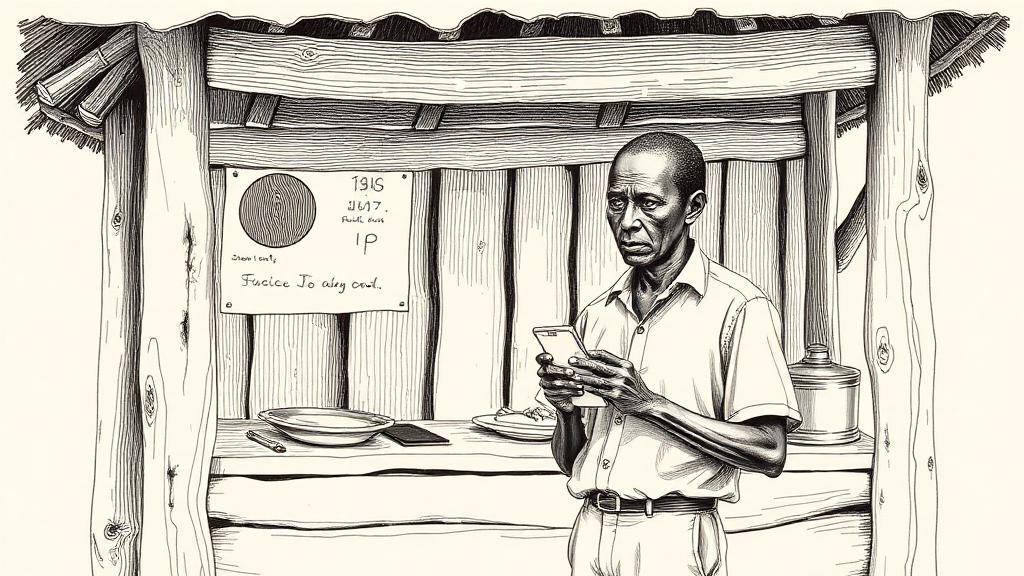
M-Pesa launched formally on March 6, 2007, with a slogan that described what Kenyans had already told them they wanted: Send Money Home. Deposits moved through a network of registered agents — phone-credit shops, petrol stations, street kiosks — who acted as human ATMs, accepting cash and crediting accounts, or paying out shillings against an SMS authorization. No bank account required. No monthly fee. The only hard prerequisite was a national ID card.
Growth was explosive in the way things only grow when they fill a genuine vacuum. One point two million customers signed up in year one, reaching 8.6 million by late 2009 and 17 million by 2011. By 2013, M-Pesa was processing more transactions annually than Western Union — a global wire-transfer network with 160 years of infrastructure behind it. By 2015, 43 percent of Kenya’s GDP was flowing through the service.
The implications ran deeper than transaction speed. A 2016 study estimated M-Pesa had lifted approximately 194,000 households out of poverty, with particularly strong effects among women, who could now hold and control money independently for the first time. The Central Bank of Kenya’s decision to let the experiment run — a “try-and-see” regulatory posture that most of its peers would have rejected outright — proved as consequential as any line of code.
The phone had become the bank. The bus drivers found other things to carry.
Sources
- M-Pesa — Wikipedia — DFID grant history, pilot details, growth figures, poverty impact study.
- The Birth of M-Pesa — Kenyan History — Origin and pivot story, March 6, 2007 launch, Western Union comparison.
- Mobile Currency in Kenya: the M-Pesa — Centre for Public Impact — Regulatory context, GDP flow statistics, agent network scale.