Not worth a Continental
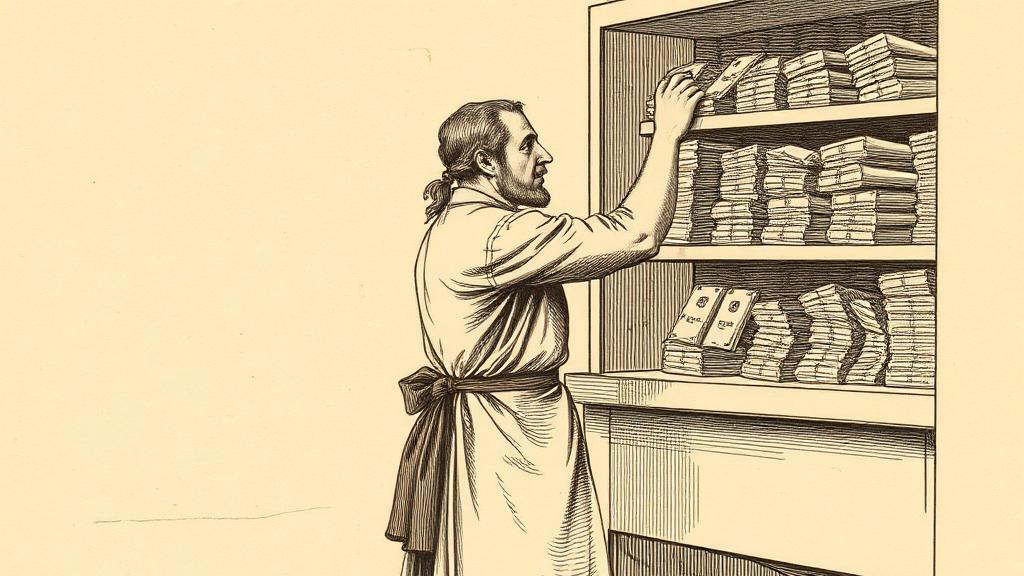
Somewhere in Philadelphia in the late 1770s, a barber ran out of wallpaper. He used Continental dollars instead — the bills were cheaper per square foot than actual paper, and considerably more plentiful.
The currency that papered that shop had been born of necessity on June 22, 1775, five days after the Battle of Bunker Hill. The Continental Congress authorized $2 million in bills of credit, printed by Hall and Sellers on Market Street in Philadelphia. The notes were nominally redeemable in Spanish silver dollars from future tax revenues — “bills of credit” rather than money, a careful euphemism for a harder truth: the Continental Congress had no power to levy taxes, and therefore no reliable means of backing the promise.
They printed anyway. Between 1775 and 1779 Congress made forty separate emissions, putting roughly $200 million in paper into circulation. Individual states added another $209 million in their own currencies on top. Against an estimated $12 million in hard coin across all the colonies, the arithmetic was merciless. By January 1779, a paper dollar was worth eight cents in silver; by May 1781, less than one cent. Washington’s commissaries rode into New Jersey and Delaware with saddlebags of Congress notes to buy provisions from farmers, who turned them away. “A wagon load of money,” Washington wrote, “will not buy a wagon load of provisions.”
Part of the problem was a printing press in New York Harbor. Beginning in 1776, the British mounted systematic counterfeiting operations from ships anchored off occupied Manhattan — the HMS Phoenix among them. The New-York Gazette, published under British occupation, ran open advertisements selling counterfeit Congress-notes “for the price of the PAPER per ream.” The fakes were sold by the ream, like stationery, and distributed through deserters crossing back into colonial lines. Benjamin Franklin, who had designed several Continental notes expressly to resist copying, later wrote that the counterfeits “circulated among the inhabitants of all the states, before the fraud was detected” and operated “significantly in depreciating the whole mass.” By some estimates, fake currency exceeded legitimate currency in circulation — a remarkable thing to be true of your money supply.
Congress formally devalued in March 1780, exchanging old bills at forty paper for one silver dollar. The remaining Continentals effectively ceased to circulate by 1781. Hamilton’s Funding Act of 1790 made the final settlement: one hundred paper dollars per silver dollar, meaning the currency ended at one cent on the dollar. The phrase “not worth a Continental” had already entered everyday speech during the war; it would stay in common use for generations, eventually crossing the Atlantic into British English as a general idiom for anything worthless.
What the Continental’s failure actually built was a constitution. The Philadelphia Convention of 1787 opened with the catastrophe still fresh. An early draft of Article I gave Congress the power “to borrow money and emit bills on the credit of the United States.” Gouverneur Morris moved to strike “and emit bills.” He argued that if the United States had credit, such bills would be unnecessary; if it lacked credit, they would be unjust. The vote to delete the phrase was nine states to two. Article I, Section 10 then explicitly prohibited states from issuing bills of credit or making anything but gold and silver coin legal tender. One delegate described the mere phrase “emit bills of credit” as “alarming as the mark of the Beast in Revelation.” The United States did not issue significant federal paper money again until the Civil War greenbacks of 1862 — an eighty-year pause that began, in a sense, in a barber’s shop in Philadelphia.
Sources
- Continental currency — Wikipedia — depreciation timetable, total emissions, 1790 settlement terms, state currency figures.
- Crisis Chronicles: Not Worth a Continental — NY Fed Liberty Street Economics — June 22, 1775 authorization, the 1779 currency crisis, and Congress’s failure to redeem.
- Faking It: British Counterfeiting During the American Revolution — Journal of the American Revolution — HMS Phoenix operations, New-York Gazette advertisements, Franklin’s account of counterfeit circulation.
- The Constitution and Paper Money — Foundation for Economic Education — Gouverneur Morris’s motion, the 9-2 vote, and Article I Section 10’s explicit ban.