The right to fix your phone
In September 2023, iFixit did something it had never done in twenty years of teardowns: it went back and lowered a score. The iPhone 14, which had received a 7 out of 10 for repairability in 2022, was retroactively dropped to 4 out of 10. The hardware hadn’t changed. The screws were the same. Apple’s software had made the device functionally irreparable without Apple’s authorization — and the old scoring system hadn’t accounted for that.
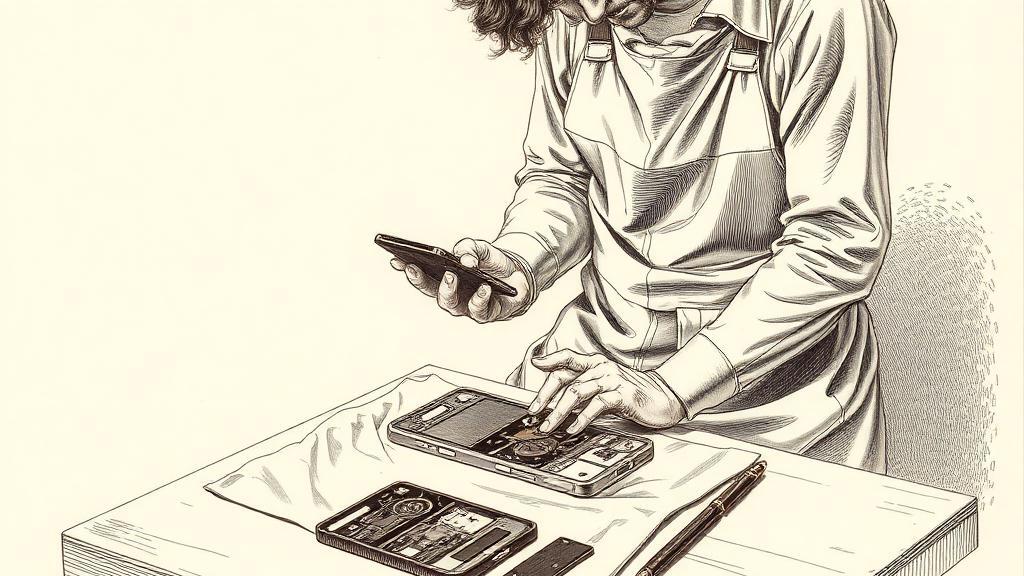
Kyle Wiens had been tearing down iPhones since the first one shipped in June 2007 — one teardown per year, every year. He and Luke Soules had founded iFixit in 2003 in a dorm room at Cal Poly, San Luis Obispo, after they failed to find parts or instructions for a broken iBook and decided to write the guides themselves. By the time the iPhone arrived, iFixit had turned teardowns into something between consumer journalism and applied archaeology: crack the device open, photograph every layer, note what’s user-replaceable and what isn’t, assign a score out of ten. A high score meant the device would outlive its warranty. A low score meant the landfill was already scheduled.
The iPhone 14 had looked like a genuine improvement. Its dual-opening chassis — accessible from both front and back — was a real engineering concession to independent repair. But Apple had been quietly expanding a system called parts pairing since the iPhone 5s Touch ID sensor, and by 2022 it reached the display, the battery, and the Face ID camera. Parts pairing binds a component to a device’s serial number in software. Install a genuine Apple replacement screen — not a counterfeit, one ordered from Apple itself — without running Apple’s proprietary System Configuration tool, and the phone shows a permanent message: “Unable to verify this iPhone has a genuine Apple display.” True Tone goes out. Face ID stops working. A functioning screen, from the correct manufacturer, flagged as unverifiable.
The System Configuration tool was not available to independent repair shops — only to Apple-authorized service providers. The tens of thousands of small repair businesses that had existed since the first mobile phones could purchase genuine Apple parts but could not fully activate them. The wall was built in firmware.
Directive (EU) 2024/1799 took that wall down. Passed by the European Parliament and requiring transposition into national law by July 31, 2026, it prohibited manufacturers from using hardware or software techniques to prevent or impede repair. For smartphones specifically, it mandated that critical parts — batteries, cameras, speakers, charging ports, and twelve others — be available to professional repair businesses within five days, for seven years after a model launches. Parts pairing, as practiced across the iPhone 12 through 16 line, became illegal in twenty-seven countries.
Apple had read the legislative calendar. In 2022, the company announced seven years of parts availability for iPhones — a timeline that matched the incoming directive closely enough to count as advance compliance. The Self Service Repair Store opened in April of that year, selling parts directly to consumers. The directive closed the remaining gaps: the software locks, the authorization bottlenecks, the exclusion of independent shops from the authentication system.
On October 26, 2026, iFixit published its teardown of the iPhone Duo. It awarded the foldable the highest repairability score any foldable phone had yet received. Nineteen years after Kyle Wiens first opened an iPhone on a workbench in San Luis Obispo, the law had caught up to the idea that if you owned the phone, you ought to be able to fix it too.
Sources
- We Are Retroactively Dropping the iPhone’s Repairability Score — iFixit — September 2023 retroactive score drop from 7/10 to 4/10, parts pairing rationale
- Parts Pairing Explained — RepairScore.eu — how parts pairing works, Face ID consequences, EU prohibition
- EU Right to Repair Is Now Law for Smartphones — HitekNova — Directive 2024/1799, 7-year parts mandate, smartphone coverage
- Ecodesign for Smartphones: Now in Effect — iFixit — EU ecodesign rules taking effect June 2025, Apple’s pre-compliance moves
- iFixit — Wikipedia — founding history, Kyle Wiens and Luke Soules, Cal Poly SLO, teardown methodology