Unsafe at Any Speed: Ralph Nader's indictment of the American car
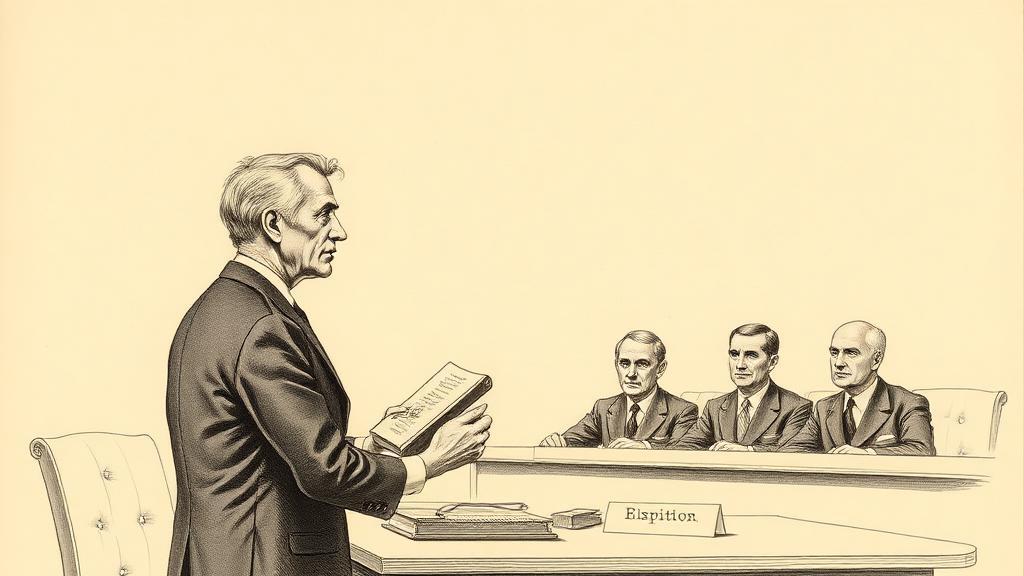
On 22 March 1966, the president of General Motors sat before a Senate subcommittee and apologised. James Roche — chief executive of the largest corporation on earth — confirmed that GM had hired private detectives to surveil a 31-year-old lawyer named Ralph Nader, tail him across Washington, and attempt to catch him in a compromising situation. Nader had written a book. GM had decided this was a threat. They were right; they just chose the worst possible response.
The book was Unsafe at Any Speed: The Designed-In Dangers of the American Automobile, published on 30 November 1965 by Grossman Publishers. Nader was a Harvard Law graduate then working as a consultant to the Senate Commerce Committee, and the book was the product of years spent reading accident-investigation files that the auto industry assumed no one outside the courtroom would ever find. His argument was not about driver error or bad roads. It was about the cars themselves.
The lead exhibit was the 1960–1963 Chevrolet Corvair. Its rear swing-axle suspension made the car prone to abrupt oversteer — tuck-under, in the engineering jargon — when pushed hard through a corner. Compounding this was a tyre-pressure requirement so asymmetric (15 psi front, 26 psi rear when cold) that drivers who simply filled up at a service station were inadvertently degrading the handling. Nader’s broader charge was structural: across the industry, styling decisions were routinely overriding safety ones. By 1965, American roads killed 49,163 people — more than the Korean War’s total US combat dead, in a single calendar year.
GM’s surveillance operation backfired with operatic completeness. When the private-detective campaign surfaced during the Senate hearings chaired by Abraham Ribicoff, it handed legislators exactly the drama they needed. Roche’s public apology on 22 March 1966 did not slow the legislation; it accelerated it. Nader later sued GM for invasion of privacy, won on appeal in January 1970, and collected $425,000 — which he promptly invested in the Center for Auto Safety, a watchdog organisation that continues to file defect petitions against manufacturers today.
President Lyndon B. Johnson signed the National Traffic and Motor Vehicle Safety Act on 9 September 1966. For the first time, the federal government could mandate specific safety equipment on production vehicles sold in the United States. The initial round of standards required lap belts at every seat, padded dashboards, collapsible steering columns, and shatter-resistant windshields. The National Highway Traffic Safety Administration, the federal agency that grew from the act’s original National Highway Safety Bureau, has been issuing and tightening those standards ever since.
Annual traffic deaths peaked near 55,000 in 1972, then fell decade by decade as federal rules accumulated and hardware improved. By the early 2020s the death rate per mile driven was more than 90 percent below its 1960s peak. A 31-year-old lawyer’s indictment of American car design, and a corporation’s clumsy effort to silence him, changed the cost-benefit calculus that automakers had been quietly running for years.
Sources
- Unsafe at Any Speed — Wikipedia — publication date, Corvair suspension and tyre-pressure details, GM surveillance campaign, Senate hearing apology, Nader lawsuit and settlement.
- National Traffic and Motor Vehicle Safety Act — Wikipedia — Congressional timeline, 9 September 1966 signing, initial safety mandates, creation of NHTSA predecessor.
- Historical Fatality Trends — Injury Facts, National Safety Council — 49,163 US traffic deaths in 1965; long-run fatality-rate decline.