The Dassler brothers' shoe factory, and the feud that split a town
In the summer of 1936, Jesse Owens crouched into the starting blocks at the Olympiastadion in Berlin, his feet laced into spikes made by a self-taught cobbler working out of a converted washroom in Bavaria. He ran four events. He won four gold medals. Adolf Hitler, seated somewhere in the VIP tribune, was not pleased. Adolf Dassler, back in Herzogenaurach 800 kilometres to the southwest, had never been more satisfied in his life.
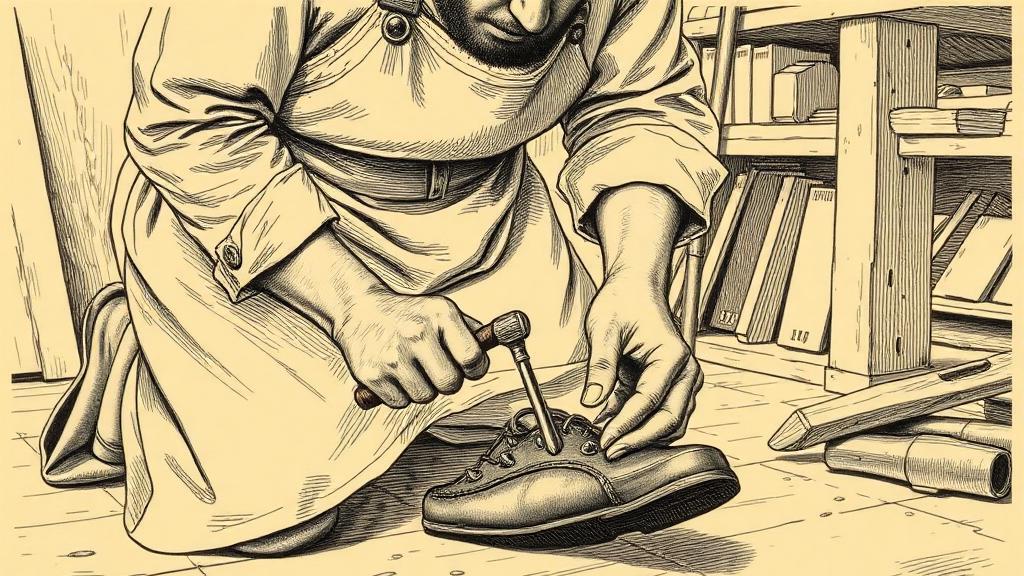
Adi Dassler and his older brother Rudolf had registered their Gebrüder Dassler Sportschuhfabrik — the Dassler Brothers Sports Shoe Factory — on July 1, 1924, in the small Bavarian town of Herzogenaurach, about 20 kilometres west of Nuremberg. The original workshop was a converted washroom in the family home, generating its own electricity by hand when the municipal supply gave out. Adi designed and built; Rudolf sold, travelling Germany with samples and order forms. By 1925 they had three employees and were shipping leather football boots and spiked track shoes.
The company grew quickly through the 1920s and early 1930s. By 1936, according to Wikipedia, it had around a hundred workers producing a hundred pairs of shoes a day. Adi attended the Berlin Games with a suitcase of handmade spikes and personally persuaded Owens to wear them — the first time any manufacturer had sponsored an African-American athlete. When American troops advanced on Herzogenaurach in April 1945, it was Adi’s wife Käthe who stepped out to intercept the lead vehicle and argue that the factory made only sports shoes. The troops accepted her word and left the machines running.
The war had already done its damage from inside. By December 1943, the factory had been converted to produce Panzerschrecks — shoulder-fired anti-tank rockets. After the German surrender, both brothers went through Allied denazification proceedings. Rudolf became convinced, with some reason, that Adi had said something during his own interrogation that prolonged Rudolf’s detention. He never forgave him. In January 1948, Rudolf registered a new company on the far side of the Aurach River — Schuhfabrik Rudolf Dassler, quickly renamed Puma. Adi registered his company, Adolf Dassler adidas Schuhfabrik, in August 1949, keeping the first factory and the family villa.
Herzogenaurach divided with them. Employees chose sides; socialising across the river ended. Bakers, schools, and shops aligned with one brother or the other. Residents reportedly checked a stranger’s shoes before deciding whether to speak. Rudolf died in 1974; Adi in 1978. They are buried on opposite ends of the Herzogenaurach cemetery.
What the brothers built together — and then tore apart — was the beginning of the modern sports shoe industry as a competitive enterprise. The feud created two companies that spent the next seven decades racing each other to sign the fastest athletes, develop the lightest sole, and sell the most shoes. The mutual contempt did not retard the work. If anything, it sharpened it.
The Aurach still runs through Herzogenaurach. The shoes — both brands of them — are still racing.
Sources
- Adolf Dassler — Wikipedia — founding date and early operations, company scale by 1936, Jesse Owens sponsorship at the Berlin Games, WWII factory conversion to Panzerschrecks, the 1948 split.
- Adidas vs. Puma: A Family Rift That Shaped Sportswear — HISTORY — Rudolf’s founding of Puma in January 1948, the division of Herzogenaurach, the burial detail.
- Chronicle — Adi & Käthe Dassler Memorial Stiftung — official primary-source chronicle of Adolf Dassler’s life and the company founding on July 1, 1924.