Fortnite Battle Royale, or the game designed in the back of an Uber
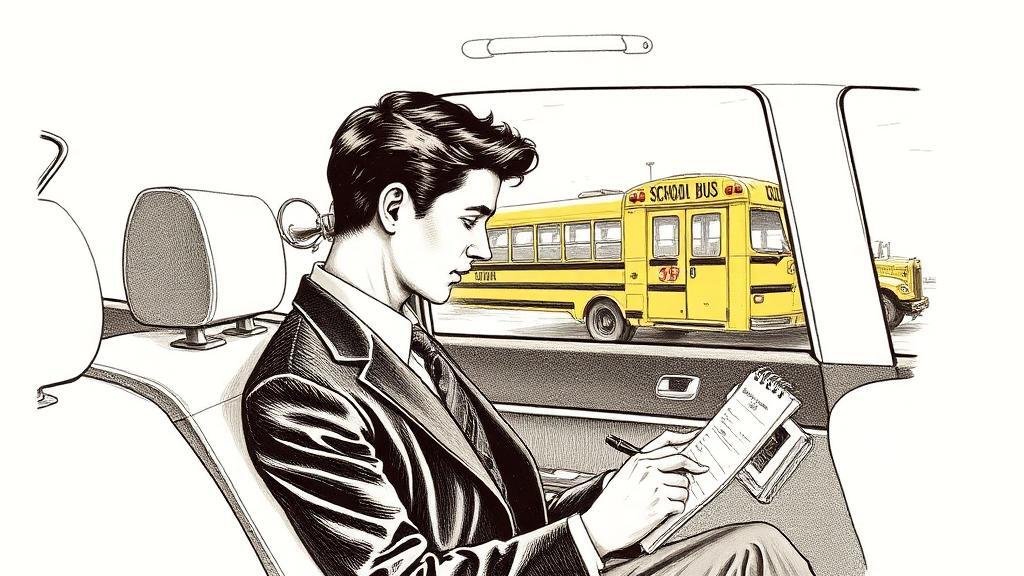
On a California freeway sometime in mid-2017, four senior executives from Epic Games were riding an Uber to a meeting at Disney when one of them noticed a school bus in the adjacent lane. Donald Mustard, Epic’s chief creative officer, pointed it out: players were going to ride a bus through the sky and jump out of it. He spent the rest of the three-hour ride writing a one-page design document. That document became Fortnite Battle Royale.
Epic already had a Fortnite: a cooperative survival shooter that had spent six years in development and launched in July 2017. It was reasonably good. Nobody noticed. Meanwhile, PlayerUnknown’s Battlegrounds — a battle royale game on PC — was pulling 150,000 simultaneous players and clearly pointing toward something. In the Uber, Tim Sweeney, Paul Meegan, Kim Libreri, and Mustard made the call: re-task the team, put it in Fortnite, make a battle royale.
The mode launched on September 26, 2017, free across PC, PlayStation 4, and Xbox One. That last word took nerve: two weeks before launch, Epic reversed the decision to put Battle Royale behind the paid Fortnite paywall, offering refunds to early-access players who had expected it. The logic was straightforward — a game more people can enter becomes a game more people enter. Within two weeks, the mode had 10 million players. By March 2018: 45 million. By November 2018: 200 million registered accounts.
What set the mode apart from PUBG wasn’t the shrinking storm circle or the 100-player format — PUBG had those first, and Bluehole, PUBG’s Korean developer, publicly said so in September 2017, complaining about similarities in UI, gameplay, and structure. What PUBG didn’t have was the building. Players could chop down trees, break stone walls, gather metal, and snap together ramps and platforms mid-fight. The vertical dimension changed the game’s whole texture: a player who ran out of cover didn’t have to run away; they could build their way up.
The development team led by Eric Williamson and Zack Estep had roughly two months to ship the mode. They did not sleep a great deal.
Ninja, a streamer who had competed in various games to modest audiences, found Fortnite in February 2018 and gained 160,000 Twitch subscribers in a single week. By March he was reportedly earning $500,000 a month. When Drake and Travis Scott joined his Twitch stream, the session broke Twitch’s concurrent viewership record. The game appeared on Saturday Night Live, on Jeopardy!, and — in what is probably the clearest sign that a video game has made it — in celebration dances during the 2018 FIFA World Cup.
The revenue figures were extraordinary but almost beside the point. Fortnite generated $2.4 billion in 2018, the highest single-year total ever recorded for a free-to-play title. The business model mattered more: cosmetics — skins, emotes, gliders — plus a seasonal battle pass that unlocked rewards for a flat fee. Every major multiplayer game released since has borrowed this structure. The battle pass is now as standard a feature as the leaderboard.
What Fortnite demonstrated was that a game could be a continuously updated platform — a place where concerts happen, branded events arrive and depart, and the map itself changes season by season. Players didn’t return because the core game changed; they returned because the world around it kept changing.
The Bus has been flying since September 2017. It has not yet landed.
Sources
- Fortnite Battle Royale — Wikipedia — launch date, player counts, revenue figures, Ninja and Drake viewership record, cultural impact.
- Fortnite’s Battle Royale Mode Was Designed During An Uber Ride — Kotaku — Donald Mustard’s account of the three-hour Uber ride, the one-page design document, and the school bus inspiration for the Battle Bus.
- PUBG Developer Threatens Epic Over Fortnite’s Battle Royale Mode — GameSpot — Bluehole’s September 2017 public complaint about similarities between Fortnite Battle Royale and PUBG.